Greece stands at a defining crossroads in its energy transition. Blessed with some of Europe's highest solar irradiance levels — averaging 1,500 to 1,900 kWh/m² annually across the mainland and islands — the country has transformed from a solar laggard into one of the Mediterranean's most dynamic photovoltaic markets. For installers, EPC contractors, energy consultants, and facility managers operating in this space, understanding the trajectory of Greek solar deployment and the technical requirements for grid-connected systems is no longer optional. It is a baseline competency.
This article examines the current state of the Greece solar energy market, the regulatory framework governing metering and monitoring, and the specific smart meter specifications that professionals need to consider for compliant, high-performance PV installations.
Greece Solar Market Overview
Market Size and Growth Projections
The Greek solar PV market has entered a period of sustained expansion driven by favourable geography, EU policy mandates, and national energy security imperatives. According to MarkWide Research, the Greece solar energy market is valued at approximately1.8billionin2026andisprojectedtoreach 4.76 billion by 2035, representing a compound annual growth rate (CAGR) of 11.4%.
Separate analysis from 6Wresearch corroborates the growth narrative, projecting a CAGR of 8.3% for the Greek solar sector from 2026 to 2032. Within the broader Greek renewable energy landscape, solar PV commands a dominant position: Mordor Intelligence data indicates that solar photovoltaic technology holds a 100% market share within the solar segment, confirming that concentrated solar power (CSP) has yet to gain meaningful traction in Greece.
These figures align with the accelerating pace of installations on the ground. Greece's cumulative installed solar capacity surpassed 8 GW in early 2026, and the country is on track to exceed 15 GW by 2030 based on current permitting pipelines and project announcements.
Key Growth Regions
Solar development in Greece is not uniformly distributed. The most active regions for new PV deployment include:
| Region | Irradiance Characteristics | Development Activity |
|---|
| Peloponnese | High (1,600–1,800 kWh/m²) | Utility-scale and agricultural solar |
| Crete | Very high (1,700–1,900 kWh/m²) | Island grid integration projects |
| Thessaly | High (1,500–1,700 kWh/m²) | Bifacial module adoption, agricultural PV |
| Central Macedonia | Moderate-high (1,400–1,600 kWh/m²) | Industrial rooftop and ground-mount |
| Western Macedonia | Moderate (1,300–1,500 kWh/m²) | Post-lignite transition, large-scale solar farms |
Western Macedonia deserves particular attention. As Greece's lignite-dependent region undergoes a managed decline in coal generation under the EU's Just Transition Framework, large tracts of former mining land are being repurposed for solar development. This represents one of the most significant utility-scale solar opportunities in Southern Europe.
Installed Capacity Trends and Targets
Greece's National Energy and Climate Plan (NECP) sets a target of approximately 70% of electricity consumption from renewable sources by 2030, with solar PV expected to contribute the largest single share. The country's transmission system operators have reported a steady year-over-year increase in new grid connection applications, with utility-scale projects (above 1 MW) dominating the pipeline in central and northern regions, while sub-100 kW systems drive volume in the residential and commercial segments across Attica and the islands.
Key Growth Drivers
EU Green Deal and Revised Renewable Energy Directive
The European Green Deal and the revised Renewable Energy Directive (RED III) establish binding targets that directly benefit Greek solar deployment. The EU-wide renewable energy target of 42.5% by 2030 — with an aspiration of 45% — creates a policy environment where member states are incentivised to accelerate permitting and grid integration for solar projects. Greece has responded by streamlining licensing procedures for renewable energy projects, reducing approval timelines from years to months for qualifying installations.
Greece's National Energy and Climate Plan
The Greek NECP outlines specific measures including simplified permitting for rooftop PV, financial support mechanisms for energy communities, and targets for energy storage co-located with solar generation. The plan explicitly acknowledges the role of smart metering in enabling higher penetration of distributed solar generation.
Grid Infrastructure Upgrades by ADMIE and IPTO
The Independent Power Transmission Operator (IPTO/ADMIE) has embarked on significant grid reinforcement projects to accommodate rising solar generation. The Peloponnese grid reinforcement programme, for instance, involves new transmission lines and substation upgrades designed to increase hosting capacity for renewable energy in one of Greece's highest-yield solar regions. These infrastructure investments unlock new areas for development that were previously constrained by grid congestion.
Utility-Scale Solar Development
Large-scale solar farms — ranging from 5 MW to over 200 MW — represent the fastest-growing segment by installed capacity. International developers and domestic energy companies are actively acquiring land rights and securing grid connection offers in Thessaly, Central Greece, and Western Macedonia. These projects require robust metering infrastructure at the point of common coupling (PCC), with specific accuracy and communication requirements dictated by the grid operator.
Net Metering for Small-Scale Systems
Greece has implemented net metering regulations allowing consumers with small solar systems — typically up to 10.8 kVA for residential and 20 kVA for commercial — to offset their electricity consumption against exported generation. Under this framework, a bidirectional energy meter records both imported and exported energy, and the consumer is billed on the net consumption over a defined settlement period. This mechanism has been a significant driver of rooftop PV adoption, particularly in urban areas and on the islands.
Bifacial Module Adoption in Arid Regions
In the high-irradiance, low-shade environments of Thessaly and the Larissa plain, bifacial PV modules are gaining traction. These modules capture reflected light from the ground on their rear surface, increasing energy yield by 5–15% compared to monofacial panels in suitable conditions. The higher energy output per unit area makes bifacial technology particularly attractive for agricultural solar and ground-mount installations where land is available but must be used efficiently. For metering, the higher and more variable generation profiles of bifacial systems reinforce the need for precise, real-time monitoring.
Regulatory and Metering Requirements
Net Metering Framework and Meter Specifications
The Greek net metering framework requires that all grid-connected PV systems have a meter capable of bidirectional energy measurement — recording both the energy consumed from the grid and the energy exported back to it. The meter must store these values separately and make them available for billing and settlement purposes. For three-phase systems, which are standard for commercial and industrial installations, the meter must measure active and reactive energy across all phases.
EU MID Compliance
All energy meters used for billing purposes within the EU must comply with the Measuring Instruments Directive (MID 2014/32/EU). This directive establishes essential requirements for accuracy, reliability, and environmental performance. MID compliance is non-negotiable for any meter installed at the grid interface of a Greek PV system. Installers should verify that their chosen meter carries a valid MID declaration of conformity and bears the CE marking with the metrology supplementary symbol (M followed by the year of production).
Connection Requirements from HEDNO and IPTO
The Hellenic Electricity Distribution Network Operator (HEDNO, formerly ΔΕΔΔΗΕ) governs distribution-level connections (up to 150 kV), while IPTO manages transmission-level connections. Both operators publish technical requirements for metering at the point of connection:
Accuracy class: Active energy measurement at Class 1 or better for billing meters; Class 0.5S is increasingly specified for commercial and utility-scale installations where higher precision is warranted.
Communication: Meters must support remote reading capabilities. RS485 Modbus-RTU is widely accepted as a communication protocol for local data acquisition from meters to data loggers, inverters, or monitoring gateways.
Tariff registration: Multi-tariff capability is required where time-of-use billing applies, which is common for commercial consumers.
Meter Specifications for Grid-Connected PV in Greece
When specifying a meter for a Greek PV installation, the following technical parameters are typically required:
| Parameter | Requirement |
|---|
| Measurement type | Bidirectional (import/export) |
| Voltage rating | 230/400V three-phase (TN-C-S system) |
| Accuracy — active energy | Class 1 minimum; Class 0.5S preferred |
| Accuracy — reactive energy | Class 2 minimum |
| Communication | RS485 Modbus-RTU |
| Compliance | CE marked, MID approved, IEC 62053-22/23 |
| Form factor | DIN rail (35mm) for panel integration |
| Display | LCD for local reading and commissioning |
Communication Protocols for Monitoring
Real-time monitoring is essential for both operational management and regulatory compliance. RS485 Modbus-RTU remains the dominant protocol for connecting energy meters to monitoring systems in Greek PV installations. This protocol provides reliable, noise-immune communication over distances up to 1,200 metres, making it suitable for both rooftop and ground-mount systems where the meter and the data acquisition point may be separated by significant cable runs.
The meter should expose standard Modbus registers for instantaneous electrical parameters (voltage, current, power, power factor per phase), cumulative energy values (import and export, active and reactive), and any supplementary data such as harmonics, temperature, or tariff registers.
Smart Meter Requirements for Greek Solar Projects
Bidirectional Measurement for Net Metering
For net metered systems, the meter must independently accumulate imported and exported active energy. This means two separate energy registers — one for energy flowing from the grid to the consumer and one for energy flowing from the PV system to the grid. The meter should also record reactive energy in both directions, as reactive power management is increasingly scrutinised by HEDNO for commercial connections.
RS485 Modbus-RTU for Inverter Integration
In a typical Greek PV installation, the energy meter communicates with the solar inverter or a monitoring gateway via RS485 Modbus-RTU. This allows the inverter's monitoring platform to display real-time self-consumption data, grid export values, and overall system performance. Compatibility with major inverter brands commonly used in Greece — including Sungrow, Solis, Huawei, and Fronius — is a practical requirement for any meter specified in this market.
Certifications: CE, IEC, and MID
The certification stack for a meter used in a Greek PV installation should include:
CE marking: Mandatory for all electrical equipment sold in the EU
MID approval: Required for meters used in billing applications
IEC 62053-22: Standard for static meters for active energy (Classes 0.2S and 0.5S)
IEC 62053-23: Standard for static meters for reactive energy (Classes 2 and 3)
These certifications provide assurance to grid operators, inspectors, and end customers that the meter meets internationally recognised performance standards.
DIN Rail Form Factor
Greek distribution boards and sub-distribution panels are designed around standard DIN rail mounting. A meter with a 35mm DIN rail form factor integrates directly into the existing panel infrastructure without requiring special brackets or enclosures. This simplifies installation, reduces commissioning time, and ensures a professional, code-compliant result. Compact dimensions are also important — in retrofit projects where panel space is limited, a meter that occupies minimal DIN rail space is a significant advantage.
Monitoring Platform Integration
Beyond local Modbus communication, the meter's data should be accessible through a monitoring platform that provides historical trending, automated reporting, and alarm management. For EPC contractors managing multiple Greek PV installations, centralised monitoring across a portfolio of sites is a key operational requirement. The meter should support seamless integration with common monitoring architectures, whether through direct connection to an inverter manufacturer's platform or via an independent energy management system.
Metering Solutions for Greek Solar Installations
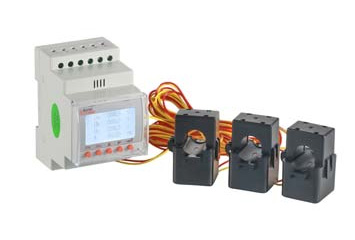
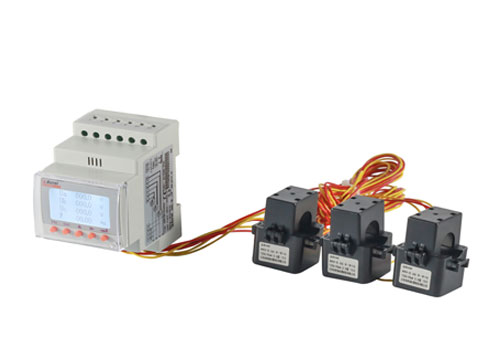
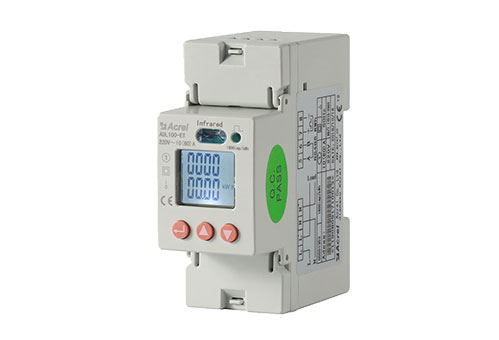
For professionals specifying metering components in Greek PV projects, the DTSD1352-C solar inverter smart meter addresses the core technical requirements outlined above. This three-phase meter measures at 230/400V with Class 0.5S active energy accuracy and Class 2 reactive energy accuracy — providing the precision level preferred for commercial and utility-scale Greek installations.
The DTSD1352-C offers bidirectional measurement for net metering applications, with separate registers for imported and exported energy across both active and reactive power. Communication is via RS485 Modbus-RTU, and the meter has verified compatibility with Sungrow and Solis inverters — two of the most widely deployed inverter brands in the Greek market. Its 35mm DIN rail form factor (126 × 91 × 74mm, 0.35kg) allows straightforward integration into standard distribution boards.
Additional capabilities relevant to the Greek market include multi-tariff support for time-of-use billing, optional harmonic analysis for power quality monitoring, and temperature monitoring. The meter carries CE, EAC, and IEC certifications and is MID-compliant, meeting the regulatory requirements for grid-connected PV systems in Greece.
Opportunities for Installers and EPCs in Greece
Residential Rooftop Solar
The residential segment continues to grow as electricity prices remain elevated and net metering provides a clear financial mechanism for payback. Installers serving the Attica region, Thessaloniki, and the islands can build recurring revenue through monitoring service contracts and maintenance agreements alongside installation work.
Commercial and Industrial Self-Consumption
Commercial and industrial (C&I) consumers in Greece are increasingly adopting solar to reduce operational energy costs and meet corporate sustainability targets. These projects typically range from 50 kW to 1 MW and require robust metering for both self-consumption optimisation and grid export compliance. For EPCs, the C&I segment offers higher project values and longer-term service relationships.
Utility-Scale Solar Farms
Large-scale solar farms represent the highest-capacity segment and require meter-grade instrumentation at the point of common coupling. Metering for these projects must meet IPTO's specific technical requirements for accuracy, communication redundancy, and data logging. The tender specifications for these projects often include detailed metering requirements that favour products with established certifications and proven field performance.
Energy Storage Hybrid Systems
The combination of solar PV with battery energy storage is gaining momentum in Greece, driven by both regulatory incentives and the technical need to manage grid export limitations. Hybrid systems require meters capable of measuring energy flows between the PV array, the battery, the load, and the grid — a more complex metering architecture than simple net metering. Meters with multi-directional measurement capability and fast communication response times are essential for effective energy management in hybrid configurations.
Specifying Metering for Greek PV Tenders
When responding to PV tenders in Greece, EPCs should ensure their metering specification addresses:
MID compliance with documented certification
Bidirectional measurement with separate import/export registers
Accuracy class appropriate to the project scale (Class 0.5S for commercial/utility)
RS485 Modbus-RTU communication with documented register maps
DIN rail mounting with specified dimensions
Compatibility with the specified inverter brand
LCD display for commissioning and local verification
Supply Chain and Procurement Considerations
The Greek solar market's rapid growth has placed pressure on supply chains for balance-of-system components, including energy meters. Installers and EPCs should consider the following when planning procurement:
Lead times: Order metering equipment well in advance of installation dates, particularly for large projects requiring quantities of identical meters.
Certification documentation: Ensure that MID declarations of conformity and CE certificates are available in formats accepted by Greek inspectors and grid operators. Lack of documentation is a common cause of commissioning delays.
Local technical support: Products backed by local or regional technical support reduce risk when commissioning issues arise. Verify that the supplier can provide Modbus register documentation and wiring diagrams in a timely manner.
Standardisation: Where possible, standardise on a single meter model across a project portfolio. This simplifies spare parts management, reduces commissioning learning curves, and streamlines monitoring platform configuration.
FAQ
What accuracy class is required for solar energy meters in Greece?
For billing applications, Class 1 active energy accuracy is the minimum under MID requirements. However, Class 0.5S meters are increasingly specified for commercial and utility-scale PV installations in Greece due to their superior precision, particularly for net metering where small measurement errors compound over time.
Does Greece require bidirectional meters for solar installations?
Yes. All grid-connected PV systems operating under net metering or self-consumption schemes must have a meter capable of independently measuring imported and exported energy. This is a fundamental requirement from HEDNO for distribution-level connections and from IPTO for transmission-level connections.
What communication protocol should a solar meter support in Greece?
RS485 Modbus-RTU is the standard protocol for integrating energy meters with inverters, data loggers, and monitoring platforms in Greek PV installations. It is accepted by all major inverter manufacturers operating in the Greek market and provides reliable communication over the distances typically encountered in rooftop and ground-mount solar systems.
Is MID certification mandatory for solar meters in Greece?
Yes. Under EU law, any energy meter used for billing or settlement purposes must comply with the Measuring Instruments Directive (2014/32/EU). This applies to all grid-connected PV systems in Greece. Installers should verify that the meter carries a valid MID declaration and the appropriate CE marking.
Can a single meter serve both net metering and inverter monitoring functions?
In most configurations, yes. A meter with bidirectional measurement, RS485 Modbus-RTU output, and appropriate accuracy class can serve both as the billing meter (or a parallel check meter) and as the data source for the inverter's monitoring platform. This dual-function approach reduces component count and simplifies wiring, though the specific configuration should be confirmed with the relevant grid operator.
 English