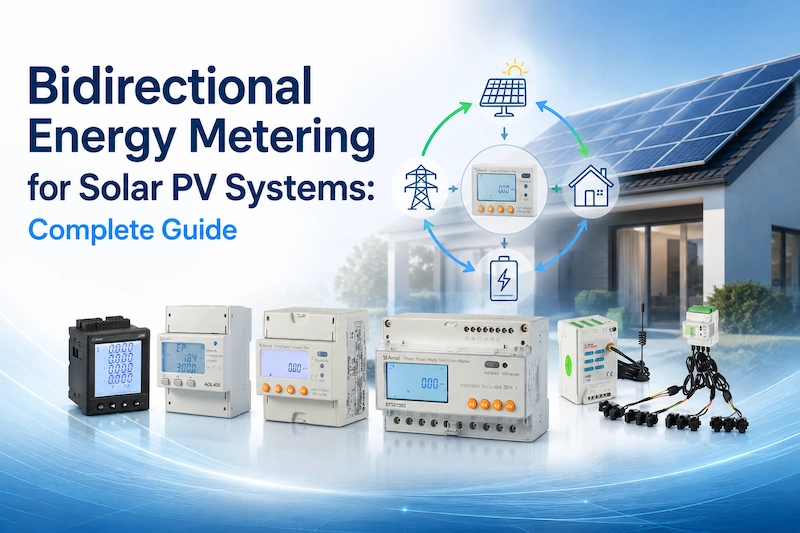
As distributed solar photovoltaic installations proliferate across commercial rooftops and utility-scale sites, energy no longer flows in one direction. Buildings now generate, consume, store, and export electricity—sometimes within the same second. Traditional unidirectional meters, designed for a world where power simply arrived from the grid, cannot capture this complexity. That gap is precisely what bidirectional energy metering fills.
This guide examines the operating principles, four-quadrant measurement, regulatory drivers, and procurement criteria that matter to solar EPC firms, utility engineers, and energy managers selecting meters for PV systems with grid interconnection.
What Is Bidirectional Energy Metering?
The Fundamentals of Import and Export Energy Flow
In a conventional building, electricity flows from the utility grid to the load. A standard energy meter accumulates kWh in a single direction and that figure becomes the billing basis. When a solar PV system is connected to the same point of common coupling (PCC), the power flow reverses whenever on-site generation exceeds instantaneous consumption. The meter must now register two distinct quantities:
Import energy — energy drawn from the grid when solar output is insufficient or absent (nighttime, cloudy periods, peak demand spikes).
Export energy — surplus solar energy fed back into the grid after satisfying local load.
A bidirectional energy meter continuously tracks both directions independently, storing import and export registers separately. This dual-register architecture is the foundation of net metering, feed-in tariff settlements, and self-consumption analytics.
The 180-Degree Phase Shift Principle
The physical mechanism behind direction detection lies in the phase relationship between voltage and current. When a building imports energy, the current vector leads or lags the voltage vector within a range close to 0 degrees (for resistive loads) or up to ±90 degrees (for reactive loads). When the building exports energy—pushing power onto the grid—the current vector effectively rotates by approximately 180 degrees relative to the voltage vector.
DSP-based (Digital Signal Processor) energy metering ICs sample voltage and current waveforms at high frequency, compute the real-time phase angle, and determine the sign of active power (P = V × I × cos φ). A positive sign indicates import; a negative sign indicates export. This calculation happens on a per-cycle basis, allowing the meter to detect direction changes within milliseconds.
How Modern DSP-Based Meters Detect Direction
Legacy electromechanical meters used rotating discs that could only spin in one direction—or, if reversed, would mechanically subtract from the register. Modern solid-state meters take a fundamentally different approach:
High-speed sampling — Voltage and current channels are sampled simultaneously at rates exceeding 3 kHz, capturing sufficient waveform detail for accurate direction detection even under rapidly changing irradiance conditions (cloud transients, partial shading).
Digital signal processing — A dedicated DSP core computes active power, reactive power, and apparent power for each measurement interval. The sign of active power directly encodes flow direction.
Four-quadrant accumulation — Rather than simply incrementing an "import" or "export" counter, the meter classifies each measurement into one of four quadrants, capturing both active and reactive energy with directional context.
This architecture eliminates the "disk creep" and mechanical inertia problems of legacy meters, ensuring that even brief export events—lasting less than one second—are accurately recorded.
Four-Quadrant Energy Measurement Explained
The power system carries both active energy (kWh, the energy that performs real work) and reactive energy (kvarh, the energy that sustains magnetic fields in motors, transformers, and inverter output filters). A complete bidirectional meter must track all four combinations of import/export and active/reactive energy.
Quadrant Definitions
| Quadrant | Active Power | Reactive Power | Practical Meaning |
|---|
| I | + (Import) | + (Inductive) | Building draws active and inductive reactive power from grid |
| II | − (Export) | + (Inductive) | Building exports active power but draws inductive reactive power |
| III | − (Export) | − (Capacitive) | Building exports active power and capacitive reactive power |
| IV | + (Import) | − (Capacitive) | Building draws active power but supplies capacitive reactive power |
Most solar PV systems with modern string inverters operate primarily in Quadrant I (nighttime, importing) and Quadrant II (daytime with surplus generation, exporting active while potentially absorbing reactive for voltage regulation). Understanding which quadrants your installation occupies informs meter selection—particularly the reactive energy accuracy class.
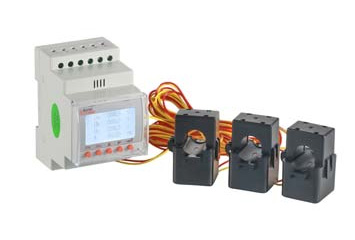
For billing accuracy and power quality monitoring, the ability to record all four quadrants independently is not optional; it is a requirement in many grid codes. The DTSD1352-C solar inverter smart meter provides four-quadrant measurement with separate registers for each, ensuring compliance with IEC 62053-22 and IEC 62053-23 standards.
Why Bidirectional Metering Is Essential for Solar PV
Net Metering Schemes
Net metering policies allow PV system owners to offset their grid consumption with exported solar energy, typically on a 1:1 kWh basis over a billing period. The settlement mechanism requires the utility to know exactly how much energy was imported and exported—separate registers, not a net figure. A bidirectional meter with time-stamped data logging enables accurate reconciliation and protects both the utility and the prosumer from disputes.
Self-Consumption Optimization
For commercial and industrial sites, maximizing self-consumption—using solar generation on-site rather than exporting—delivers the highest return because the retail electricity price typically exceeds the feed-in tariff rate. Bidirectional metering provides the granular import/export data needed to:
Size battery storage systems based on actual export patterns.
Shift controllable loads (HVAC, EV chargers, water heaters) to periods of peak solar output.
Validate self-consumption ratios claimed in project proposals against real-world performance.
Feed-in Tariff Billing Accuracy
In jurisdictions with guaranteed feed-in tariffs, every exported kWh has a monetary value. Meter accuracy directly translates to revenue. A Class 1 meter may under- or over-register by up to 1% compared to a Class 0.5S meter. For a 500 kW commercial PV system exporting 600,000 kWh annually at a feed-in tariff of €0.08/kWh, a 1% measurement uncertainty represents €4,800 per year—a figure that compounds over the 20-year lifetime of a typical power purchase agreement. Specifying a Class 0.5S meter reduces this uncertainty to 0.5%, halving the financial exposure.
Zero Export / Anti-Reverse Flow Control
Many distribution grid operators prohibit or limit reverse power flow at the PCC to prevent voltage rise on low-voltage feeders. Implementing zero export requires:
A bidirectional meter at the PCC that reports real-time export power to the inverter or a power controller.
The inverter curtails its output dynamically to ensure export stays at or below the permitted threshold (often zero).
The response time of this control loop depends on the meter's update rate and communication latency. Meters communicating via RS485 Modbus-RTU at 9600 baud can deliver updated readings every 100–200 ms, sufficient for most curtailment algorithms. Faster polling or pulse outputs can reduce this further for applications demanding sub-second response.
Energy Storage System Integration
Battery energy storage systems (BESS) introduce additional bidirectional flow—at the grid connection point and at the battery's AC-coupled or DC-coupled interface. Accurate metering at both points enables:
Round-trip efficiency calculation for the storage system.
Time-of-use arbitrage verification (charging at off-peak rates, discharging at peak rates).
Demand charge management by confirming that peak demand reduction targets are met.
Compliance with grid code requirements for storage-connected facilities.
Technical Specifications That Matter
Accuracy Classes and Their Financial Impact
Energy meter accuracy is expressed as a percentage of reading under reference conditions. The relevant IEC standards define three primary classes for active energy:
| Accuracy Class | Permissible Error (at reference conditions) | Typical Application |
|---|
| 0.5S | ±0.5% | Revenue-grade billing, large commercial/utility PV |
| 1 | ±1.0% | Commercial metering, standard PV installations |
| 2 | ±2.0% | Sub-billing, monitoring, non-revenue applications |
The "S" designation in Class 0.5S indicates enhanced performance at low load currents (1% of rated current), which matters for PV systems that frequently operate at partial load. For reactive energy, Class 2 is common, though Class 0.5 is available for applications requiring reactive power billing accuracy.
Financial illustration: Consider a 1 MW commercial PV installation exporting 1,200,000 kWh per year at a blended feed-in rate of €0.10/kWh. Total annual export revenue is €120,000. The measurement uncertainty band:
Class 1: ±€1,200/year (€24,000 over 20 years)
Class 0.5S: ±€600/year (€12,000 over 20 years)
The cost difference between a Class 1 and Class 0.5S meter is typically €30–80. The ROI on accuracy upgrade is measured in months, not years.
Measurement Parameters
A comprehensive bidirectional meter for solar PV should capture:
Electrical quantities: Voltage (V), Current (I), Active Power (P), Reactive Power (Q), Apparent Power (S), Power Factor (PF), Frequency (f)
Energy accumulation: Import kWh, Export kWh, Import kvarh, Export kvarh, kVAh — all in four quadrants
Power quality: Total harmonic distortion (THD) for voltage and current, individual harmonic content up to the 31st order
Environmental: Operating temperature range (at least −25 °C to +55 °C for outdoor or rooftop installations), with optional temperature monitoring for thermal management
The DTSD1352-C measures all core electrical parameters and offers optional harmonic analysis, making it suitable for installations where inverter-generated harmonics may affect power quality reporting.
Communication: RS485 Modbus-RTU
RS485 Modbus-RTU remains the dominant communication protocol for energy metering in solar PV applications. Its advantages for this use case include:
Multi-device bus: Up to 32 devices (or 247 with repeaters) on a single two-wire bus, reducing cabling costs in multi-inverter installations.
Inverter compatibility: Major inverter manufacturers—including Sungrow, Solis, Growatt, SMA, and Fronius—support Modbus-RTU meter integration for export limiting and self-consumption management.
EMS/SCADA integration: Every major energy management system, SCADA platform, and building management system (BMS) can read Modbus-RTU registers natively or through protocol gateways.
Noise immunity: Differential signaling on the RS485 bus provides robust noise rejection in the electrically noisy environment typical of inverter rooms and switchboards.
High-Speed Sampling for Cloud Transient Effects
Solar irradiance can drop by 80% within seconds when a cloud passes over a PV array, causing the power flow at the PCC to swing rapidly from export to import. Meters with sampling rates below 1 kHz may alias these transients, resulting in averaged readings that underreport both peak export and peak import. Sampling at 3 kHz or higher captures the true waveform, enabling accurate energy registration and providing reliable data for inverter control algorithms.
Data Logging Intervals
Billing verification and energy auditing require time-series data at standardized intervals:
15-minute intervals: The standard for most European balance-responsible parties and many net metering programs. A meter storing 15-minute data for 36 days captures approximately one full billing period, allowing comparison with utility invoices.
1-hour intervals: Suitable for self-consumption analysis and less granular feed-in tariff verification.
1-minute or real-time streaming: Required for active export limiting and demand response applications, typically delivered via Modbus polling rather than on-device logging.
Net Metering vs. Net Billing vs. Self-Consumption: Meter Requirements
The regulatory framework governing grid-connected PV determines what the meter must measure and how data is reported.
Net Metering (NM)
Under net metering, import and export kWh are netted over a billing period, and the prosumer pays for the net energy consumed. The meter must:
Maintain separate import and export registers.
Optionally support time-of-use registers if the net metering tariff varies by period.
Provide data resolution sufficient for the utility's billing cycle reconciliation.
Net Billing (NB)
Net billing assigns different prices to imported and exported energy—typically, the export price is lower than the retail import price. The meter must:
Record import and export in separate registers with time-stamped data.
Support tariff switching if the export rate varies by time of day.
Provide data that can be integrated with the utility's billing system via communication protocols.
Pure Self-Consumption (No Grid Export)
Some installations are designed to maximize self-consumption with no grid export—either by choice or by regulatory restriction. The meter must still measure bidirectional flow to:
Detect and log any accidental export events for compliance reporting.
Provide real-time export data to the curtailment controller for zero-export enforcement.
Track self-consumption ratios for performance evaluation and incentive compliance.
In all three scenarios, a four-quadrant bidirectional meter provides the comprehensive data foundation. Regulatory differences affect data granularity and reporting, but not the underlying metering requirement.
Anti-Reverse Flow / Zero Export Control: Technical Implementation
Control Architecture
Zero export control typically follows this architecture:
Measurement: A bidirectional meter at the PCC measures real-time active power flow, reporting positive values for import and negative values for export.
Communication: The meter transmits power data to the inverter or a dedicated power controller via Modbus-RTU at a polling interval of 100–500 ms.
Control algorithm: The inverter's internal controller (or external PLC) calculates the required output setpoint: P_target = P_load − P_grid_limit. If P_grid_limit is zero, the inverter curtails output to exactly match on-site load.
Actuation: The inverter adjusts its MPPT operating point or AC output current to reduce generation to the required level.
Critical Success Factors
Meter placement: The meter must be installed at the true PCC—the point where the building's electrical installation connects to the utility network. Placing it downstream of local loads results in inaccurate export readings.
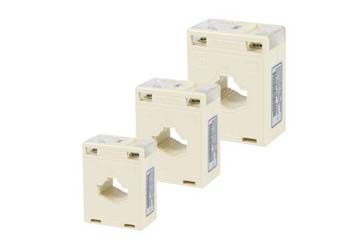
Wiring polarity: CT (current transformer) polarity must be correct. Reversed CT wiring will cause the meter to register import as export and vice versa, rendering zero-export control non-functional.
Communication reliability: A communication failure between the meter and inverter can cause the system to default to full output or shutdown, depending on the fail-safe configuration. Redundant communication paths or heartbeat monitoring should be considered for critical installations.
Response time: The total loop time—meter sampling + Modbus transmission + inverter processing + MPPT adjustment—should be under 2 seconds for effective cloud transient management.
The DTSD1352-C supports direct RS485 Modbus-RTU connection to major inverter brands and delivers updated power readings at intervals compatible with standard zero-export control loops.
Integration with EMS, SCADA, and BMS
Modern commercial buildings and industrial facilities increasingly consolidate energy data from all subsystems—solar PV, battery storage, HVAC, EV charging, lighting—into a single energy management platform. The bidirectional meter serves as the primary data source for the grid interface, providing:
Real-time power flow visualization: Dashboards showing instantaneous import/export, self-consumption ratio, and solar coverage percentage.
Historical trend analysis: Daily, weekly, and monthly energy balance reports for performance verification and financial reporting.
Automated demand response: Triggering load shedding or battery discharge when import power approaches a demand charge threshold.
Alarm and event logging: Detecting grid outages, inverter trips, reverse power events, and power quality exceedances.
Integration pathways include:
| Integration Path | Protocol | Typical Use Case |
|---|
| Direct inverter integration | RS485 Modbus-RTU | Zero export, self-consumption display |
| EMS / SCADA | Modbus-RTU or Modbus-TCP (via gateway) | Facility-wide energy management |
| BMS | BACnet IP or KNX (via protocol gateway) | Building automation integration |
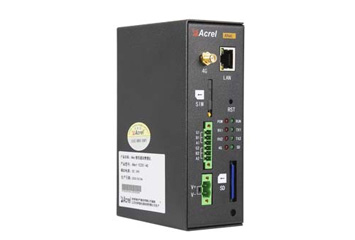
| Cloud platform | MQTT or REST API (via data logger) | Remote monitoring, multi-site management |
Procurement Criteria for EPCs and Installers
When specifying a bidirectional energy meter for a solar PV project, the following criteria should appear in tender documents and procurement specifications:
1. Accuracy
Specify Class 0.5S for active energy on all revenue-grade and feed-in tariff applications. For monitoring-only applications, Class 1 is acceptable. Reactive energy accuracy of Class 2 is standard; specify Class 0.5 if reactive billing applies.
2. Certification
Verify compliance with relevant standards: IEC 62053-22 (active energy, Classes 0.2S and 0.5S), IEC 62053-23 (reactive energy), and IEC 62053-21 (Classes 1 and 2). For installations in the European Economic Area, CE marking is mandatory. Additional certifications such as EAC (Eurasian Economic Union) may be required depending on the project location.
3. Measurement Range
Ensure the meter's rated voltage and current range covers the installation's operating conditions. For three-phase systems, 230/400V is standard. Current range should accommodate both minimum nighttime loads (where accuracy at low current matters) and maximum import/export conditions. Direct-connected meters typically support up to 80A; above this, CT-operated meters are required.
4. Communication and Interoperability
Confirm RS485 Modbus-RTU support with publicly available register maps. Verify compatibility with the project's specified inverter brand—most manufacturers publish lists of tested and approved meters. Request sample register maps during the evaluation phase to confirm data availability for the required parameters.
5. Form Factor and Installation
DIN rail mounting (35mm) is the standard for switchboard installation and simplifies integration into existing distribution boards. Compact dimensions reduce panel space requirements. An LCD display allows local verification of readings without requiring a connected system.
6. Environmental Specifications
Verify the operating temperature range covers the installation environment. Rooftop and outdoor switchboard installations may experience temperatures from −25 °C to +55 °C or wider. Humidity and pollution degree ratings should match the installation location.
A Proven Reference Point
The DTSD1352-C is a three-phase bidirectional meter designed specifically for solar PV and energy storage applications. With Class 0.5S active / Class 2 reactive accuracy, four-quadrant measurement, RS485 Modbus-RTU communication, and compatibility with major inverter brands including Sungrow and Solis, it addresses the core procurement criteria outlined above. Its DIN rail mount form factor (126 × 91 × 74 mm, 0.35 kg) fits standard distribution boards, and its CE/EAC/IEC certification covers most international markets.
Conclusion
Bidirectional energy metering is not an optional accessory for grid-connected solar PV—it is the measurement infrastructure upon which billing, performance monitoring, grid compliance, and system optimization all depend. The choice of meter accuracy class has direct financial consequences that accumulate over the 20–25 year lifetime of a PV installation. Four-quadrant measurement ensures complete visibility into both active and reactive energy flows, while high-speed sampling captures the transient behavior that defines real-world solar generation.
For EPC firms and energy managers, specifying the right meter at the outset—Class 0.5S accuracy, Modbus-RTU communication, four-quadrant capability, and appropriate certifications—avoids costly retrofits and ensures that the energy data foundation supports every downstream application from billing to battery control.
FAQ
What is the difference between a bidirectional meter and a standard energy meter?
A standard energy meter measures energy flow in one direction (import only) and accumulates a single kWh register. A bidirectional meter independently measures both import and export energy flows, maintaining separate registers for each direction. It also typically provides four-quadrant measurement, capturing reactive energy in addition to active energy with directional context.
Do I need a bidirectional meter for a grid-tied solar system?
Yes. Any grid-tied PV system that exports surplus energy to the grid requires a bidirectional meter. Without one, the exported energy cannot be accurately measured, which prevents net metering settlement, feed-in tariff payments, and self-consumption analysis. Even systems designed for zero export benefit from bidirectional metering to verify compliance and detect accidental export events.
What accuracy class should I specify for a commercial solar installation?
For commercial installations where the meter is used for billing or feed-in tariff settlement, Class 0.5S for active energy is recommended. The financial impact of lower accuracy compounds over the installation's lifetime—a 1% measurement uncertainty on a system exporting 600,000 kWh/year at €0.10/kWh represents €6,000 of annual revenue ambiguity. The modest cost premium for Class 0.5S pays for itself within the first year.
How does zero export control work with a bidirectional meter?
The bidirectional meter at the PCC continuously measures real-time power flow and communicates this data to the solar inverter via RS485 Modbus-RTU. When the meter detects that power is flowing toward the grid (export), the inverter's control algorithm reduces its output to eliminate or limit the export. This closed-loop control typically operates with a response time of 1–2 seconds, fast enough to handle most load and solar transients.
Can a bidirectional meter integrate with my existing building management system?
Most modern bidirectional meters communicate via RS485 Modbus-RTU, which can be integrated with building management systems through protocol gateways that convert Modbus to BACnet, KNX, or other BMS protocols. Many BMS platforms also support native Modbus integration. The key requirement is that the meter provides a publicly available register map detailing the memory addresses for each measured parameter.
 English