Businesses reduce electricity costs most effectively when energy data becomes specific enough to show where, when, and why power is being consumed. A monthly utility bill shows total consumption, but it rarely explains which production line, HVAC system, tenant, machine, or operating period is responsible for unnecessary cost.
A smart energy management system closes this information gap. By combining connected meters, communication networks and monitoring software, businesses can track individual loads, identify abnormal consumption, manage peak demand and verify whether energy-saving measures are actually working.
For commercial buildings and industrial facilities, the real value is not simply collecting more data. It is turning electrical measurements into decisions that reduce avoidable consumption without disrupting normal operations.
How Does a Smart Energy Monitoring System Help Reduce Electricity Costs?
The first source of savings is visibility.
A conventional electricity bill normally provides a building-level total. An energy usage monitor installed at key distribution points can separate that consumption by floor, department, tenant, production area or major equipment group.
Once this level of detail is available, energy managers can distinguish normal operating demand from avoidable consumption.
For example, a factory may discover that compressors continue drawing significant power during non-production hours. An office building may reveal that HVAC loads remain unusually high after occupancy drops in the evening. A shopping centre may find that lighting schedules no longer match actual opening hours.
These problems are difficult to identify from monthly billing data alone. A smart energy management platform makes consumption patterns visible over hours, days and operating cycles, allowing facility teams to address specific causes instead of relying on general energy-saving targets.
What Should Businesses Monitor Besides Total kWh?
Energy consumption is important, but kWh alone does not explain electrical behaviour.
For commercial and industrial energy management, an energy usage monitor should ideally provide enough information to understand both consumption and load conditions. Voltage, current, active power and power factor can help facility teams determine whether equipment is operating normally and whether electrical capacity is being used efficiently.
Demand is especially important in facilities where electricity charges are influenced by peak load. A short period when multiple large loads operate simultaneously may have a disproportionate impact on the electricity bill.
Historical trends are equally useful. Comparing the same machine or building zone across similar operating periods can reveal gradual efficiency losses that may otherwise remain unnoticed.
The practical question should therefore be:
Does the meter provide data that allows the facility team to take action?
If the answer is no, simply increasing the number of measurements will not produce meaningful savings.
How Can IoT-Based Smart Energy Meters Improve Energy Management?
An iot based smart energy meter adds communication to traditional electrical measurement, allowing energy data to be transferred automatically to a local or cloud-based monitoring platform.
This changes the way businesses manage distributed electrical loads.
Instead of sending staff to read meters manually, energy managers can monitor multiple distribution panels, branches or facilities from a central interface. Data can be collected at regular intervals and compared with historical operating patterns.
This is particularly valuable for businesses operating multiple sites, remote facilities or large industrial campuses. A connected meter architecture allows the energy team to investigate abnormal consumption without first visiting every electrical panel.
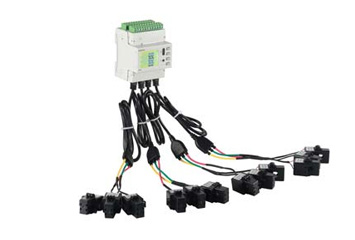
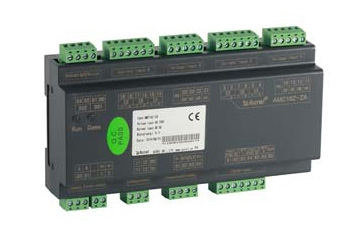
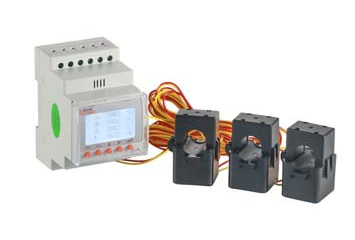
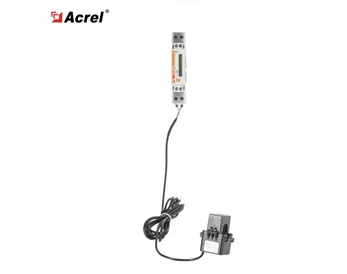
For an ADW Series IoT power meter application, the meter can form part of a broader monitoring architecture in which electrical data is collected from individual circuits and transmitted to the management platform. The purpose is not simply remote meter reading; it is to create a continuous data stream that can support operational decisions.
Where Should Energy Meters Be Installed for the Best Results?
Installing only one meter at the building entrance provides total consumption but very little diagnostic information. Installing meters on every small circuit, however, may create unnecessary hardware and data complexity.
The better approach is hierarchical monitoring.
| Monitoring Level | What It Reveals | Typical Business Use |
|---|
| Main incoming supply | Total site consumption and demand | Overall energy performance |
| Distribution panel | Consumption by area or system | Department or floor comparison |
| Major equipment | Individual equipment behaviour | HVAC, pumps, compressors, production machinery |
| Multi-circuit monitoring | Several branch loads in one panel | Dense commercial or industrial distribution |
| Remote site | Site-level operating pattern | Multi-site energy management |
For most projects, priority should be given to loads that consume significant energy, operate for long periods or have a strong influence on peak demand.
This makes the monitoring system easier to manage while ensuring that the collected data has a clear financial or operational purpose.
Can Smart Energy Management Reduce Peak Demand?
Yes. In many commercial and industrial facilities, reducing peak demand can be as important as reducing total kWh.
Consider a facility where chillers, production machinery, pumps and charging equipment all start within the same period. Even if each system is operating efficiently on its own, their combined load can create a much higher peak.
With smart energy management, operators can identify when these peaks occur and determine which loads contribute most heavily.
The response may involve changing operating schedules, staggering equipment start-up times or moving flexible loads to lower-demand periods. The appropriate strategy depends on the facility, but accurate interval data is required before these decisions can be made confidently.
This is why an iot based smart energy meter becomes more valuable when it is part of a complete monitoring system rather than being used only as a digital replacement for a traditional meter.
How Can Energy Monitoring Detect Equipment Problems?
Changes in electrical consumption can provide an early indication that equipment is no longer operating as expected.
If a pump begins consuming more energy while delivering the same output, maintenance teams have a reason to investigate. If one production line shows a higher baseline load than comparable lines, there may be a process, equipment or operating issue behind the difference.
An energy usage monitor can also reveal loads that remain active when they should be idle. These background loads often appear insignificant individually, but across many machines and thousands of operating hours they can become a meaningful source of wasted electricity.
Energy data should therefore be reviewed together with production schedules, occupancy and equipment operating status. This context makes it easier to distinguish genuine inefficiency from normal changes in demand.
What Should Businesses Look for When Choosing a Smart Energy Monitoring System?
The system should fit the electrical architecture first and the software platform second.
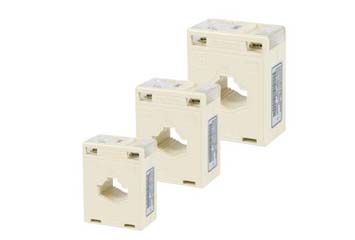
A factory with many three-phase circuits may need multi-circuit monitoring and current transformers, while a distributed commercial portfolio may place greater importance on remote communication and centralized cloud access.
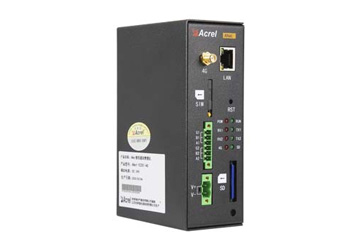
Communication also matters. A meter may use RS485/Modbus inside a local electrical network, while gateways or wireless communication can connect remote data to higher-level platforms.
Scalability should be considered from the beginning. Many businesses start by monitoring a few major loads and later expand to more departments, production lines or facilities. Selecting an iot based smart energy meter and communication architecture that can support this expansion reduces the need to redesign the system later.
Most importantly, businesses should avoid choosing equipment only according to the number of available functions. The best monitoring system is one that provides the measurements needed for specific energy-management decisions and presents them in a format that operators can actually use.
From Energy Data to Measurable Cost Reduction
Installing meters does not automatically reduce an electricity bill. The savings come from what happens after the data is collected.
An effective process is straightforward: establish the normal consumption pattern, identify significant deviations, investigate the cause, implement an operational or technical change, and then use the same monitoring data to verify the result.
For example, if changing an HVAC schedule is expected to reduce night-time consumption, the monitoring system should show whether the baseline actually falls after the change. If production equipment is replaced with a more efficient model, historical data provides a useful benchmark for evaluating the improvement.
This continuous measurement-and-verification cycle is what turns smart energy management from a monitoring tool into a cost-control system.
FAQs
What is a smart energy monitoring system?
It is a system that combines energy meters, communication and software to monitor electricity consumption across buildings, equipment or individual circuits.
Can an energy monitor lower my electricity bill?
The monitor itself does not reduce consumption, but it helps identify waste, abnormal loads and peak demand so corrective action can be taken.
What does an IoT smart energy meter do?
An iot based smart energy meter measures electrical data and transmits it to a monitoring or energy-management platform for remote analysis.
How often should energy consumption be monitored?
For commercial and industrial facilities, interval monitoring is generally more useful than monthly readings because it reveals operating patterns and abnormal consumption.
Which equipment should be monitored first?
Start with major energy consumers such as HVAC systems, compressors, pumps, production equipment and other loads that significantly affect total consumption or peak demand.
Conclusion
The greatest advantage of a smart monitoring system is not that it measures more electricity data, but that it makes energy consumption easier to explain and control.
By placing an energy usage monitor at meaningful points in the electrical distribution system and connecting meters through an appropriate IoT architecture, businesses can identify avoidable consumption, detect abnormal operating patterns and manage peak demand more effectively.
When these insights are integrated into daily facility and production decisions, smart energy management becomes a practical method for controlling electricity costs rather than simply another monitoring technology.
 English