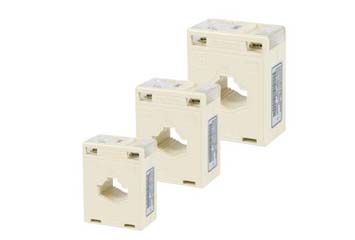
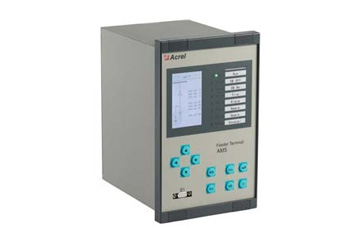
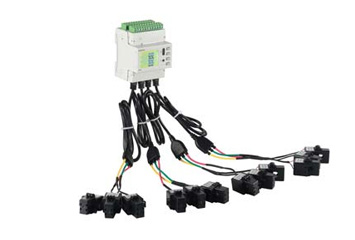
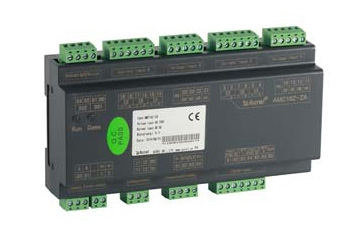
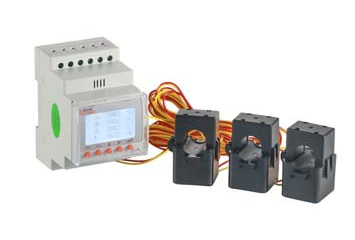
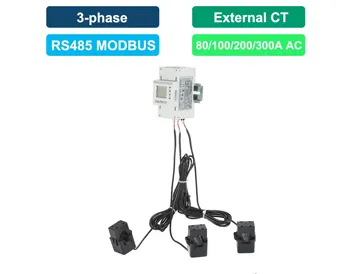
Choose an energy meter single phase for individual 230 V single-phase circuits, small commercial loads, tenant units, lighting branches and similar applications. Choose an energy meter 3 phase when monitoring three-phase distribution boards, HVAC systems, motors, production equipment or other higher-power commercial and industrial loads.
For engineers, however, phase configuration is only the first decision. Current range, direct or CT connection, 3P3W versus 3P4W wiring, accuracy, communication and the required measurement parameters all affect whether a meter will perform correctly in the final installation.
What Is the Practical Difference Between Single-Phase and Three-Phase Energy Meters?
The primary difference is the electrical system each meter is designed to measure.
An energy meter single phase measures the voltage, current, power and energy consumption of a single-phase circuit. It is commonly installed downstream of distribution boards where individual loads or users need separate energy measurement.
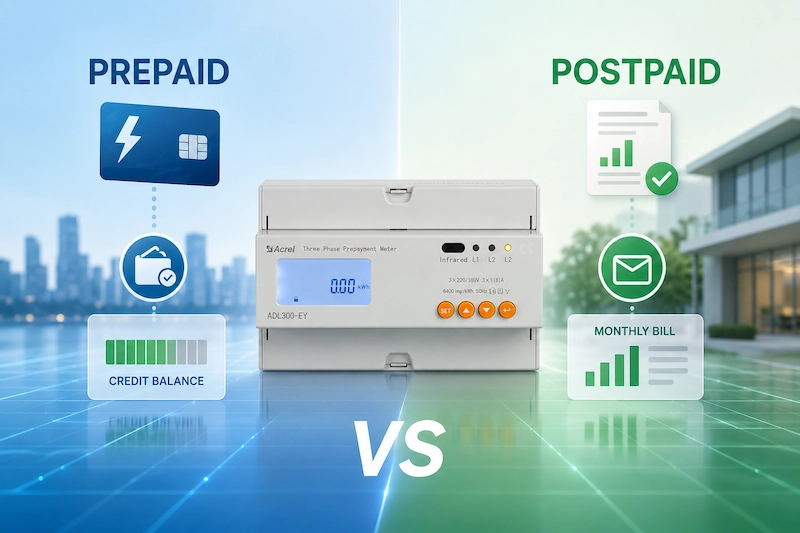
An energy meter 3 phase monitors all three phases of a three-phase electrical system. Depending on the meter and wiring configuration, it can provide both total and phase-specific electrical data. This is particularly valuable in commercial and industrial systems where engineers need to understand not only total kWh consumption but also how the load is distributed across the phases.
| Selection Factor | Single-Phase Meter | Three-Phase Meter |
|---|
| Typical supply | Single-phase AC | Three-phase AC |
| Common application | Lighting, shops, offices, individual circuits | Motors, HVAC, machinery, main distribution |
| Energy measurement | Single-phase kWh | Total three-phase kWh |
| Installation complexity | Lower | Higher |
| Phase-specific analysis | Not required | Often important |
| CT connection | Depends on current range | Common for higher-current systems |
| Typical project role | Branch/sub-metering | Main or major-load metering |
A kwh meter 3 phase should therefore not be selected simply because the connected load is large. Engineers must first confirm that the circuit itself is three-phase and that the meter supports the actual distribution topology.
When Should Engineers Specify an Energy Meter Single Phase?
A single-phase meter is appropriate when the monitored circuit operates independently on one phase and there is no requirement to measure the other phases.
Typical applications include individual offices, retail units, apartments within mixed-use developments, lighting circuits and smaller electrical equipment.
In these situations, installing an energy meter single phase at branch level provides more useful information than relying only on the main building meter. Facility managers can separate consumption by tenant, department or load and use that data for internal energy allocation or efficiency analysis.
For engineering selection, check the expected maximum current carefully. Some applications can use direct-connected meters, where the load current passes directly through the meter. Higher-current circuits may require a CT-operated configuration.
The engineer should also determine whether simple kWh measurement is sufficient. For building energy management, parameters such as voltage, current, active power, reactive power, power factor and frequency may provide considerably more operational value.
When Is an Energy Meter 3 Phase the Better Choice?
Three-phase metering becomes necessary when the load or distribution system uses a three-phase supply.
This includes main switchboards, floor distribution boards, industrial production lines, pumps, compressors, chillers, elevators and many other commercial or industrial loads.
A suitable energy meter 3 phase can provide total energy consumption while also allowing engineers to examine electrical conditions across individual phases.
This matters because three-phase systems are not always perfectly balanced. A significant difference in phase currents can indicate uneven load distribution. Persistent imbalance can reduce the efficiency of the electrical system and may contribute to additional heating or equipment stress.
For applications focused primarily on energy accounting, a kwh meter 3 phase may provide all the required billing and consumption information. Where the meter is also intended for facility management or electrical diagnostics, additional parameters such as phase voltage, current, power factor, demand and harmonics may be worth specifying.
3-Phase 3-Wire or 3-Phase 4-Wire: Why Does It Matter?
This is one of the most important details engineers should verify before specifying a three-phase meter.
A three-phase three-wire system normally consists of three phase conductors without a neutral. It is commonly found in certain industrial distribution systems and motor applications.
A three-phase four-wire system includes three phase conductors and a neutral. It is common in commercial buildings where the same distribution system supplies both three-phase and single-phase loads.
The selected energy meter 3 phase must support the actual wiring arrangement. Incorrect configuration can lead to inaccurate measurements or commissioning problems.
Engineers should therefore confirm the following before ordering the meter:
3P3W or 3P4W electrical system;
nominal line and phase voltage;
expected current range;
direct or CT-operated measurement;
CT ratio where external current transformers are used.
These details should normally be established from the single-line diagram rather than determined after the meter has already been purchased.
Direct Connection or CT Connection: Which Should You Use?
The decision depends mainly on circuit current and the metering architecture.
A direct-connected meter carries the measured current through its own terminals. This simplifies installation and is effective for circuits within the meter's supported direct-current range.
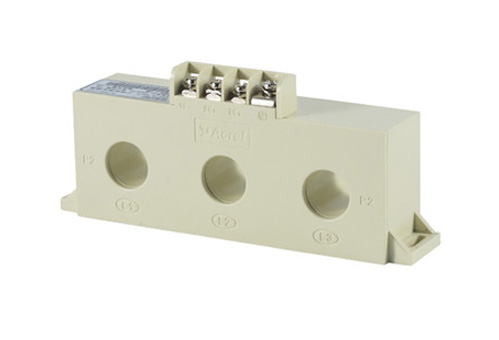
CT-operated meters measure current indirectly through external current transformers. They are generally preferred for higher-current feeders and larger commercial or industrial loads.
For a kwh meter 3 phase connected through CTs, engineers need to verify both the meter input and the CT ratio. Incorrect ratio configuration is a common source of energy-data errors because the displayed or transmitted value may differ significantly from actual consumption.
CT orientation also matters. Reversed polarity can produce incorrect power direction or abnormal energy readings.
The same principle applies to an energy meter single phase when CT measurement is used: the current transformer, meter configuration and circuit wiring should be treated as one measurement system rather than separate components.
What Accuracy and Measurement Functions Do Engineers Actually Need?
Higher specification is not automatically better. The meter should be selected according to how the data will be used.
For basic sub-metering, accurate active energy measurement may be the main requirement. For energy-management projects, the meter should usually provide enough electrical parameters to explain changes in energy consumption.
Voltage and current help identify operating conditions. Active and reactive power provide information about load behaviour, while power factor is useful when assessing inductive industrial loads. Demand data can be important where electricity tariffs include peak-demand charges.
Advanced applications may also benefit from multi-tariff records, historical data or harmonic measurements.
The important distinction is between billing data and operational data.
A kwh meter 3 phase used only for consumption allocation may not require the same functionality as a meter integrated into an industrial energy-management platform.
Should an Energy Meter Have RS485 or Modbus Communication?
For standalone meter reading, communication may not be essential. For modern commercial and industrial projects, however, it is often highly valuable.
RS485 with Modbus RTU allows multiple meters to transmit electrical data to a gateway, PLC, building management system or energy-management platform.
Instead of manually checking each energy meter single phase or three-phase meter, operators can monitor distributed loads centrally and analyse historical consumption patterns.
Communication becomes particularly important when a project involves:
numerous sub-metering points;
multiple floors or buildings;
industrial production equipment;
tenant energy allocation;
automated energy reports;
centralized energy-management platforms.
Engineers should verify communication requirements during the design stage, including addressing, baud rate, network topology and compatibility with the upper-level system.
Adding communication after installation is usually less efficient than designing it into the original metering architecture.
How Do You Choose Between Single-Phase and Three-Phase Meters for the Same Building?
Large buildings rarely require only one meter type.
A practical metering architecture usually combines them.
An energy meter 3 phase may be installed at the main incoming supply and major distribution boards, while an energy meter single phase is used downstream for individual tenants, lighting circuits or smaller loads.
For example, a commercial building may use:
Main incomer → Three-phase meter → Floor distribution → Three-phase meter → Individual tenant circuits → Single-phase meters
An industrial facility may instead use:
Main distribution → Three-phase meter → Production area → Three-phase meters for machinery → Single-phase meters for auxiliary loads
This hierarchical approach produces more useful energy data because it shows both overall consumption and where that consumption originates.
Engineers should avoid over-metering every circuit without a clear objective. Each measurement point should support a practical requirement such as billing, cost allocation, equipment monitoring, peak-demand management or energy-efficiency analysis.
FAQs
Can a single-phase energy meter be used on a three-phase supply?
Not for complete three-phase measurement. A single-phase meter measures only one phase and should not replace a properly configured three-phase meter.
What does a three-phase kWh meter measure?
A kwh meter 3 phase measures electrical energy consumed by a three-phase circuit and may also measure voltage, current, power and other parameters depending on the model.
Do three-phase meters need current transformers?
Not always. Lower-current circuits may use direct connection, while higher-current applications commonly use CT-operated meters.
What is the difference between 3P3W and 3P4W?
3P3W uses three phase conductors without neutral, while 3P4W includes three phases plus a neutral conductor.
Is a three-phase meter suitable for industrial machinery?
Yes. An energy meter 3 phase is commonly used to monitor motors, compressors, pumps, HVAC equipment and production machinery operating on three-phase supplies.
Should I choose a meter with Modbus?
Choose Modbus when meter data needs to be collected remotely by a BMS, EMS, PLC, gateway or other centralized monitoring system.
Conclusion
The correct meter is determined first by the electrical system and then by the monitoring objective.
Use an energy meter single phase for single-phase branches and individual loads. Use an energy meter 3 phase or kwh meter 3 phase for three-phase feeders, major equipment and distribution systems.
From there, engineers should verify wiring topology, current range, direct or CT connection, measurement accuracy and communication requirements. A meter selected around these engineering conditions provides reliable energy data and creates a stronger foundation for commercial building management, industrial energy analysis and long-term electricity cost control.
 English