Choosing the right energy meter for a commercial or industrial building starts with four practical questions: Is the circuit single-phase or three-phase? What current range must be measured? Will the meter be connected directly or through current transformers? And does the building management system need real-time communication?
For small branch circuits, tenant areas, lighting systems and individual equipment, a compact din rail energy meter is often the most practical choice. Larger three-phase loads, main distribution boards and industrial equipment usually require more advanced metering, often combined with CT inputs and communication such as Modbus RTU.
The objective is not simply to record kWh. A well-selected meter should provide data that can support cost allocation, equipment monitoring, energy analysis and building-wide energy management.
Should You Choose a Single-Phase or Three-Phase Energy Meter?
The electrical distribution system should determine the first stage of meter selection.
A single-phase meter is generally used for 220-230 V branch circuits supplying lighting, small offices, retail units, residential-style loads or individual equipment. When buyers search for an energy meter single phase solution, they should check not only voltage compatibility but also maximum current, installation space and communication requirements.
Three-phase meters are more appropriate for commercial HVAC equipment, pumps, production machinery, large distribution feeders and other higher-power loads. An energy meter 3 phase model should match the building's wiring configuration, typically three-phase three-wire or three-phase four-wire.
| Application | Recommended Meter Type | Typical Requirement |
|---|
| Lighting or small branch circuit | Energy meter single phase | Compact installation and basic kWh monitoring |
| Shop, office or tenant sub-metering | Single-phase DIN rail meter | Individual consumption measurement |
| HVAC, pump or industrial equipment | Energy meter 3 phase | Three-phase power and energy monitoring |
| Main distribution panel | Three-phase multifunction meter | Multiple electrical parameters and communication |
| Central energy management system | Modbus meter | RS485/Modbus integration |
The key is to select the meter according to the circuit being monitored rather than installing the same meter type throughout the entire building.
Direct-Connected Meter or CT-Operated Meter: Which Is Better?
Current rating is one of the most important selection criteria.
Direct-connected meters allow the load current to pass through the meter itself. They are suitable when circuit current remains within the meter's rated input range. This approach reduces installation complexity and is commonly used for branch circuits and smaller loads.
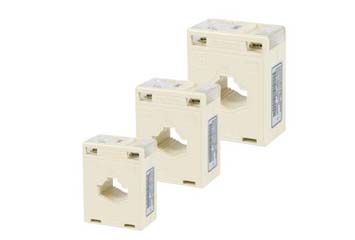
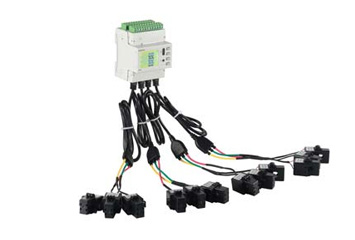
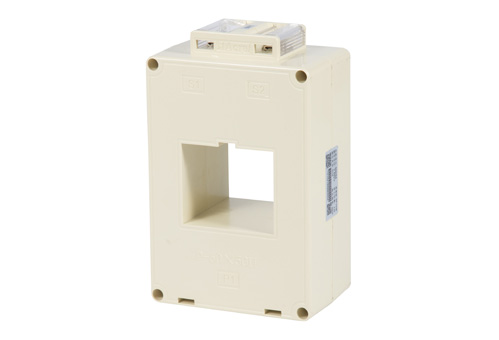
For larger feeders and industrial circuits, CT-operated meters are usually more appropriate. Current transformers reduce the measured current to a level that the meter can safely process, allowing the same metering architecture to cover much larger electrical loads.
Before selecting a meter, engineers should therefore confirm:
maximum expected circuit current;
direct-input current rating of the meter;
CT secondary current and transformation ratio where applicable;
required measurement accuracy.
Oversizing or undersizing the metering arrangement can affect both measurement reliability and installation cost.
Why Is a DIN Rail Energy Meter Commonly Used in Commercial Buildings?
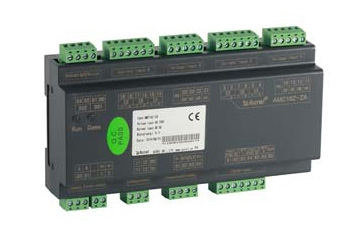
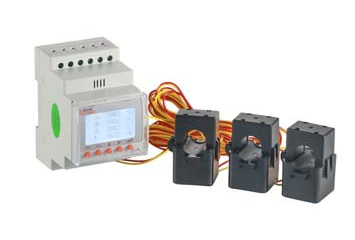
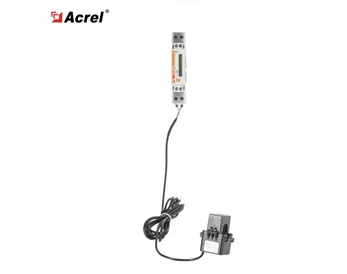
A din rail energy meter is particularly suitable for building distribution boards because it can be installed alongside circuit breakers and other control devices without requiring a separate panel cut-out.
This becomes valuable in projects involving dozens or even hundreds of metering points. Floor distribution panels, tenant cabinets, equipment panels and branch circuits can all be monitored without dramatically increasing enclosure size.
DIN rail installation also makes future expansion easier. If a building owner later wants to add sub-metering for new tenants, EV chargers, HVAC zones or production equipment, additional meters can be incorporated into the distribution architecture more easily.
However, physical size should not be the only consideration. The selected din rail energy meter should still provide the electrical parameters, accuracy and communication functions required by the energy management strategy.
When Should You Choose a Modbus Meter?
A modbus meter is recommended when energy data needs to move beyond the local meter display and become part of a building management, SCADA or energy management system.
Through RS485 and Modbus RTU communication, multiple meters can transmit data such as energy consumption, voltage, current, power, power factor and frequency to a central monitoring platform.
This allows facility managers to compare consumption between floors, departments, tenants or individual loads without manually reading each meter.
A modbus meter is particularly useful for:
multi-tenant commercial buildings;
factories with multiple production lines;
shopping centres and office complexes;
data centres and infrastructure facilities;
projects implementing centralized energy management.
For larger installations, communication architecture should be considered during the design stage. Engineers need to check device addressing, baud rate, RS485 topology and compatibility with the supervisory system. Selecting a meter with communication capability is useful only when the rest of the system can reliably collect and interpret the data.
What Electrical Parameters Should an Energy Meter Measure?
For simple billing or consumption monitoring, active energy in kWh may be sufficient. Commercial and industrial energy management usually requires more information.
Voltage and current help identify abnormal operating conditions. Active and reactive power provide a clearer view of load behaviour, while power factor can reveal inefficient use of electrical capacity. Frequency monitoring may also be relevant for certain industrial applications.
More advanced projects may require demand monitoring, multi-tariff energy recording or harmonic analysis.
The required functionality should therefore follow the purpose of the project. A tenant billing system and an industrial power-quality monitoring system may both use an energy meter 3 phase, but they do not necessarily require the same measurement capabilities.
How Many Energy Meters Does a Commercial Building Need?
There is no fixed number. Metering points should follow the building's energy management objectives.
If the goal is only to monitor total electricity consumption, one meter at the incoming supply may be sufficient. If the goal is to understand where electricity is being consumed, additional meters should be installed at meaningful distribution levels.
A practical hierarchy may include the main incoming supply, major distribution panels and selected high-consumption loads. In commercial buildings, separate tenant or floor-level measurement can improve cost allocation. In industrial facilities, monitoring individual production lines or energy-intensive machinery can help identify abnormal consumption and operating inefficiencies.
Installing meters at every circuit is not always necessary. The better approach is to place meters where the resulting data can support an operational or financial decision.
Key Factors to Check Before Selecting an Energy Meter
Before finalizing a meter specification, confirm the electrical system, current range and installation method first. Then evaluate measurement accuracy, required parameters and communication capability.
For connected buildings, system compatibility deserves particular attention. A suitable modbus meter should integrate smoothly with the planned gateway, PLC, BMS, SCADA or energy management platform.
For panel-based installations, check the available DIN rail space and wiring arrangement. For high-current applications, confirm CT specifications and ensure that the meter supports the required transformer ratio.
This selection process helps avoid a common problem in energy monitoring projects: choosing a meter that can measure electricity correctly but cannot provide the data, connectivity or scalability required by the overall management system.
FAQs
What is the difference between a single-phase and three-phase energy meter?
A single-phase meter measures single-phase circuits, while a three-phase meter is designed for three-phase electrical systems and larger loads.
Can a three-phase energy meter be used in commercial buildings?
Yes. An energy meter 3 phase is commonly used for main distribution boards, HVAC systems, pumps and other three-phase loads.
What is a Modbus energy meter?
A modbus meter communicates measurement data to external systems, commonly through RS485 using the Modbus RTU protocol.
Why use a DIN rail energy meter?
A din rail energy meter provides compact installation inside electrical distribution panels and is convenient for sub-metering applications.
Do I need CTs for an energy meter?
CTs are generally required when the circuit current exceeds the meter's direct-input range or when the metering design uses a secondary current input.
Conclusion
The right energy meter should match both the electrical circuit and the building's energy-management objective. An energy meter single phase solution is often sufficient for smaller branch circuits, while an energy meter 3 phase is more appropriate for major commercial and industrial loads.
For projects requiring centralized monitoring, selecting a modbus meter with reliable RS485 communication makes it easier to integrate multiple measurement points into a BMS, SCADA or energy management platform. Combined with the compact installation advantages of a din rail energy meter, this creates a scalable metering architecture that can support both day-to-day energy monitoring and longer-term efficiency improvements.
 English